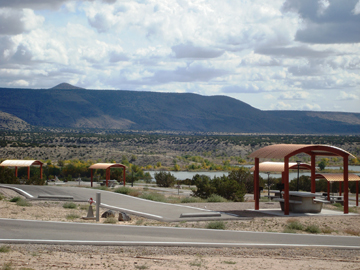
 Cochiti Lake is a U.S. Army Corps of Engineers managed lake located in Sandoval County, New Mexico, and within the boundaries of the Pueblo de Cochiti Nation on the Rio Grande about 50 miles upstream from Albuquerque. Cochiti Dam is one of the four Corps of Engineers projects for flood and sediment control on the Rio Grande, operating in conjunction with Abiquiu, Galisteo and Jemez Canyon Dams.
Cochiti Lake offers two public recreation areas for your enjoyment: the Cochiti Recreation Area on the west side of the lake and the Tetilla Peak Recreation on the east side. Each recreation area has a boat ramp for launching vessels. A visitor center is open to the public near the Park Headquarters. Scenic overlooks are on both sides of the lake. The Tetilla Peak Recreation Area is open April - October while Cochiti is opened year-round. Cochiti Lake is a No-Wake lake and alcohol is not allowed.
Please be aware that all areas outside of the two recreation areas are lands owned by the Cochiti Pueblo and are not open to the public.
Stage II fire restrictions are in effect!
N.M. Game & Fish weekly fishing reports
N.M. fishing regulations
N.M. fishing license information
Geocaching is permitted at Cochiti Lake only with express knowledge and approval of the project manager. Contact Cochiti Lake for details.
Cochiti Lake Weather Information
 Protect Your Waters and Stop Aquatic Hitchhikers!
Clean, Drain & Dry before transporting your boat or equipment.
Click here for more information!